
A Day at the Monastery
Monastic life
Born in the first centuries of Christianity, the monastic life is a path where women and men choose to put Christ at the heart of their lives. In community, they share a life of prayer, work and fraternity, punctuated by listening to the word of God and seeking the essential.
To enter a monastery is to discover a place of silence, simplicity and welcome, where everyone gradually learns to discern the presence of God and to let their lives be transformed by this encounter.
Common life
In the monastery, each sister is a gift entrusted by the Lord. Fraternity is a grace to welcome every day, as well as a path to follow. Living together means learning to receive the other as he or she is, to love, forgive, listen, let oneself be transformed. We share prayer, work, joys, fragilities and the impulses of the heart.
Gradually, everyone discovers that communion is not born of perfection, but of trust in God. Visiting a monastery is entering into an adventure where fraternal life, simple and joyful, unfolds with the grace of God.
Study & Lectio divina
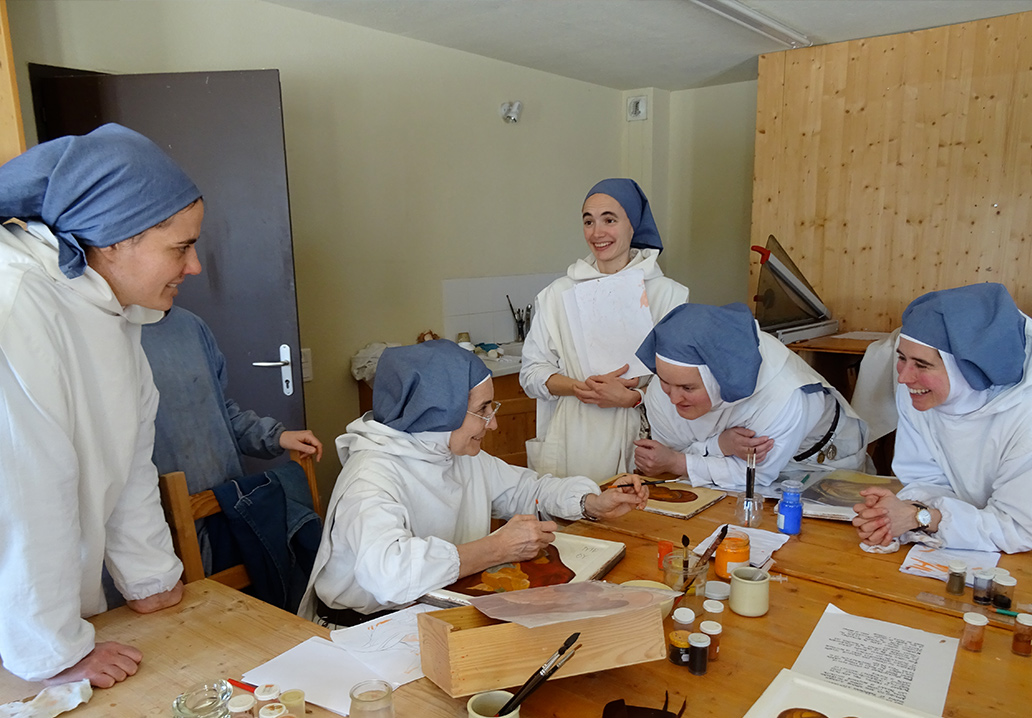
In a monastery, each day offers a time to welcome the word of God: read it, meditate on it, let it descend into the heart. Lectio divina opens a path of listening and encounter with the Lord. The study deepens this research through theology, philosophy and texts of the Church, nourishing the intelligence as well as the interior life.
In the silence of the cell or in the scriptorium, word of God, reflection and prayers unite. Visiting a community is discovering a place where seeking God becomes a source of light, peace and deep joy
Liturgy & prayer
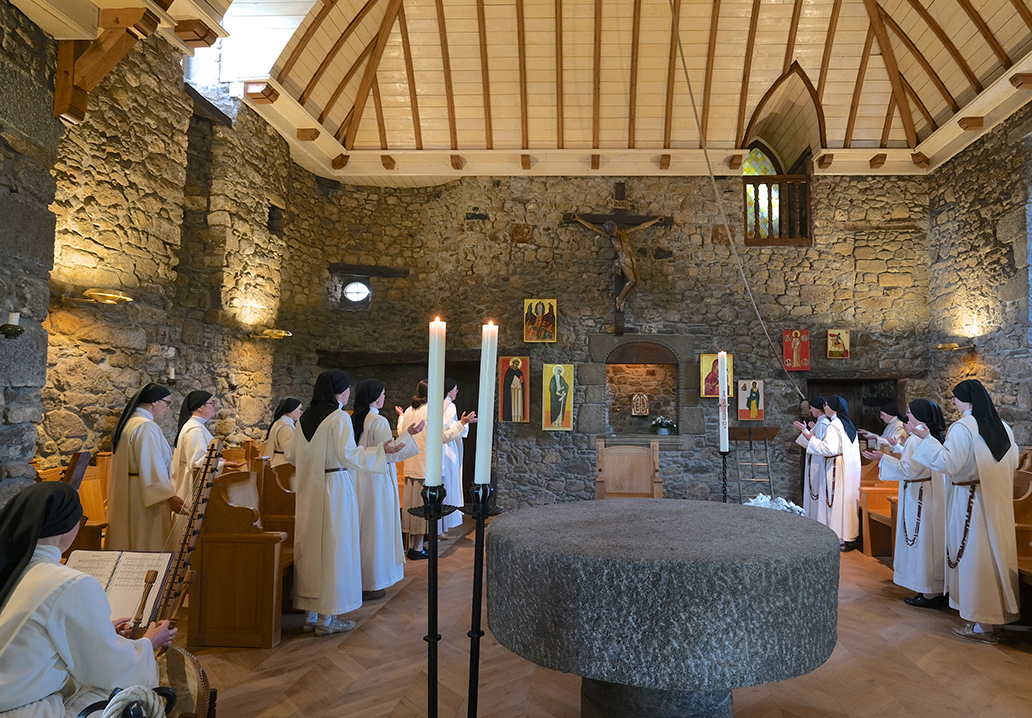
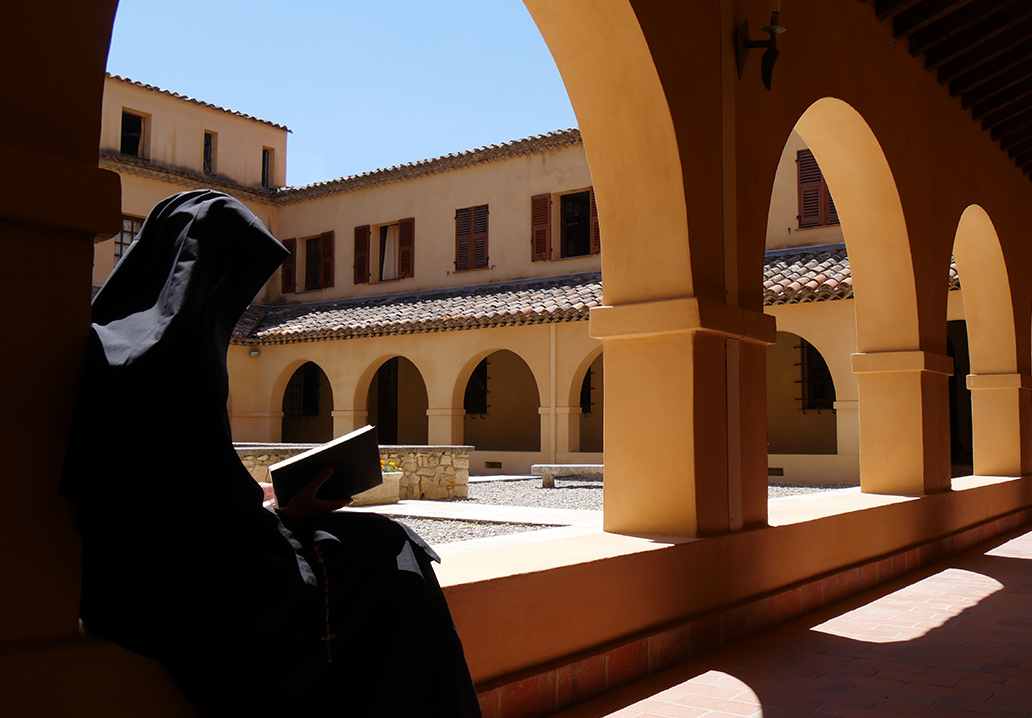
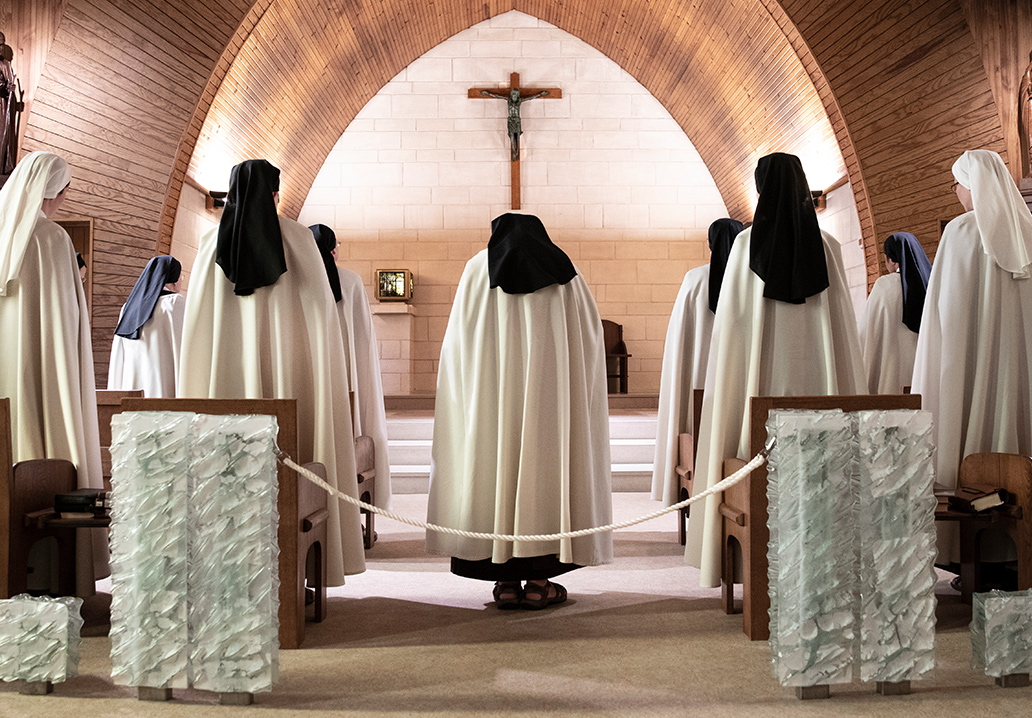
In a monastery, prayer takes on many faces. There is prayer, this heart-to-heart simple and true with God, in the silence of a cell or a chapel. Liturgical prayer brings the community together and punctuates the day with services, psalms and singing, where beauty leads
heart to God. Sometimes you just have to stand there, in front of him.
To visit a community is to discover a place where prayer becomes breath, light and inner strength; a space where the heart unites, opens to peace and carries the world in hope
Work
In a monastery, work prolongs prayer: ora et labora. Garden, workshop, sewing, reception, cooking or other daily tasks…Each activity is carried out with care, simplicity and a spirit of service. By participating in God's creative work, work makes it possible to meet the needs of the community, to live in communion with all those who work and in solidarity with the poorest.
In the most ordinary gestures, nuns learn to keep their hearts united to the Lord. Visiting a monastery is discovering a life where peaceful effort becomes a path of meaning, joy and inner balance.

Silence & withdrawal from the world
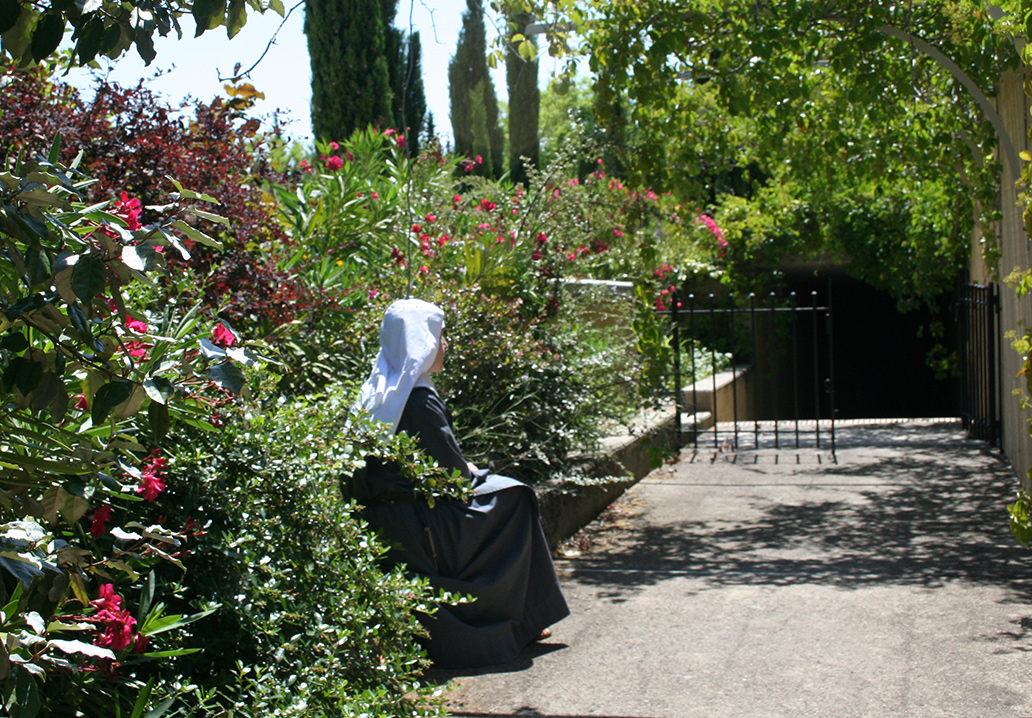
In a monastery, silence becomes a place of listening and meeting: opening the ear of the heart, letting the word of God join life and gradually shaping the inner being. In this inhabited solitude, friendship with the Lord grows and prayer carries the world: the poor, the sick, the wounded, the seekers of God.
To withdraw from the noise of the world is not to distance oneself from it, but to enter more deeply into the heart of the Church and of humanity. Those who walk through the door of a monastery are welcomed like Christ, to receive peace, light and hope.
Engagement
To enter the monastic life is to respond to a call and open a path where the heart learns to give itself to God. After a time of welcome and discovery, the postulate allows you to taste prayer, fraternal life and the rhythm of the community. The novitiate deepens the relationship with Christ through formation, study, spiritual accompaniment and the discovery of the traditions of the order.
Common training times with other novices enrich this path. Temporary vows mark a progressive commitment before the final profession: a "yes" forever, in the joy of consecrating one's life to God, within a community, at the service of the Church and the world.